


I joined a panel on Monday at UC Berkeley on “Higher Education Under Attack.” Hopefully I can write something soon about all I learned from the other panelists and the participants. For now, here are my remarks:
About a year ago, I wrote an essay in the New York Times titled “$15 billion is Enough to Fight the President.”
The $15 billion referred to the size of Columbia’s endowment.
My essay detailed some of the math for how wealthy university endowments could afford to buy time for the fight.
Time to litigate.
Time for elite and public opposition to grow against Trump.
Time for the midterms to potentially break Trump’s control of Congress.
But perhaps most importantly, time to develop a strategy.
A year later, I think my argument still looks pretty good. $15 billion was enough. More importantly, $53 billion at Harvard, $36 billion at Princeton, and $40 billion at the University of California were enough – especially after we consider state funding and other revenue streams for UC.
Litigation, declining support for Trump, and even Congressional action on scientific research funding have all put universities in a stronger position to fight.
But as far as I can tell, universities as organizations have not developed much of a strategy to influence the coming inflection points that will determine their futures.
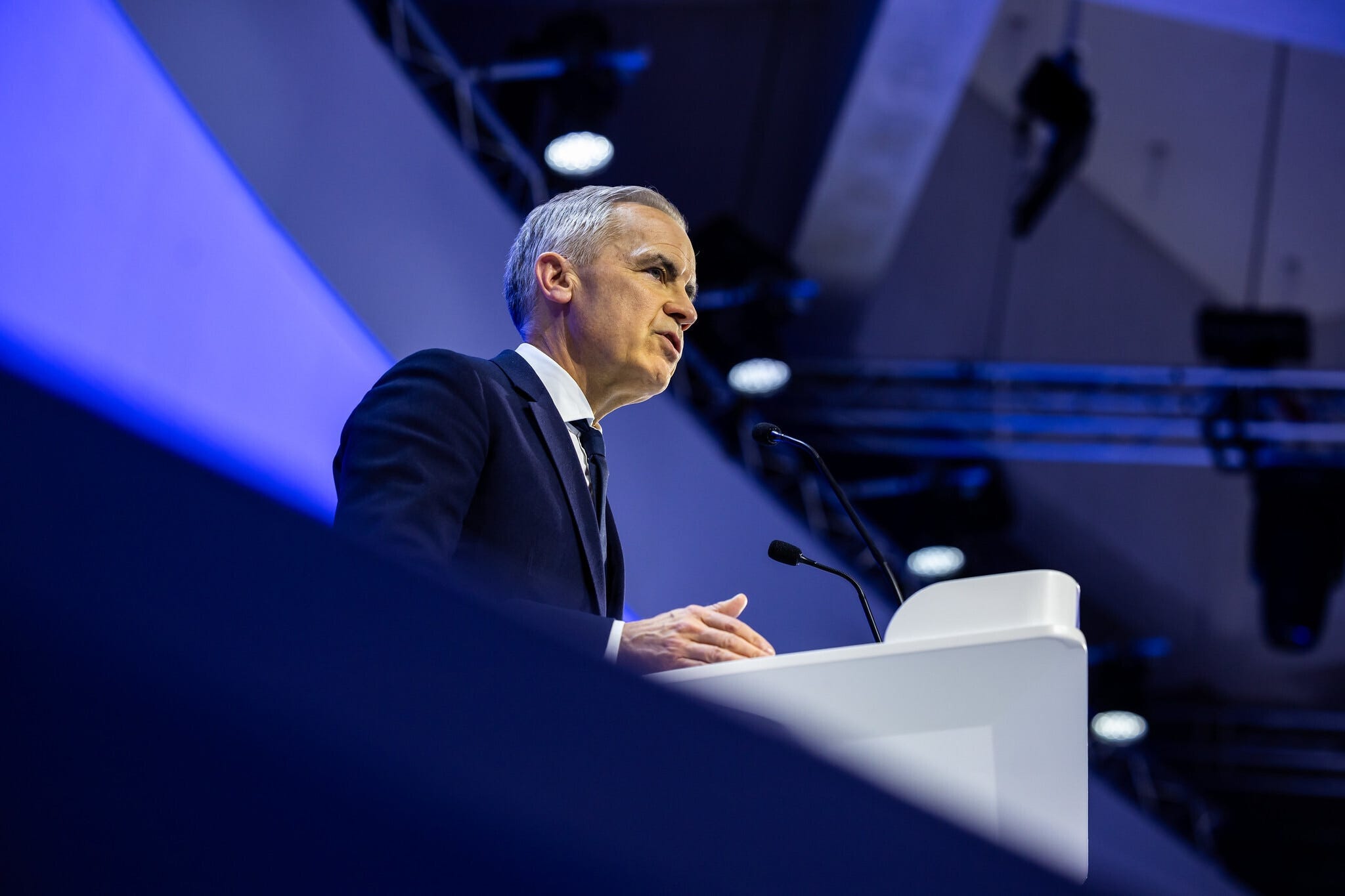
While this is unfortunate, I think it’s not surprising. The attack on universities is part of a larger rupture in the entire American and global social order, to borrow the phrase used by Canadian Prime Minister Mark Carney in his recent speech to the World Economic Forum in Davos. Carney and others have argued there’s no going back to the old order, because there’s no way to trust that it will hold up after its rupture this time. Recognizing that there’s no going back is essential to what Carney calls a values based realism for confronting the world as it is.
Without further work, it can feel immobilizing to realize there is no going back. Universities as we know them can’t just exist as islands amid a ruptured larger order, or as islands in an authoritarian America with powerful backers.
To push through the shock of this realization, universities need to develop a strategy that both transforms academic and helps construct a broader new order to follow the rupture. The construction of any such order would almost certainly require the marshallings of state and economic power by forces outside of universities. Without such a restoration of constitutional democracy on some new terms, the threats to universities will remain even when Trump goes away.
The threats to universities will remain in part because America will still have a set of Wall Street and Tech billionaires who have not received sufficient attention for conceiving and advocating for Trump’s attacks on universities. They did so in collaboration with far-right activists like Christopher Rufo. But leaders from Wall Street and tech played a leading role, not a supporting one. They include people like venture capitalist Mark Andreesen and private equity billionaire Mark Rowan along with Elon Musk who you probably know. In their own words, they set their sights on universities because they view some of the policy and social ideas coming out of universities as threats to their wealth and status. Under the old order, billionaires like these had no reason to feel threatened by the ideas of academics who Bourdieu counted as part of the dominated fraction of the dominant class. In a shift, these new billionaires have adopted an oligarchic posture towards universities among others because of their perceived threats.
Making peace with these adversaries is difficult because they are not completely irrational in their perceptions of threats from academia. Academic law and people like Elizabeth Warren played central roles in developing financial regulations and consumer protections that are despised by the new oligarchs. The same is true of anti-trust reforms advanced by people like Lina Khan. Here at UC Berkeley, you have the proposed billionaire wealth tax from Emmanuel Saez and Gabriel Zucman. Academic critiques of masculinity and whiteness also offend the status honor of many oligarchs. And after graduating from universities where these ideas circulate, the college educated have become the most reliable voters for the politicians who support them.
How the new billionaires got from perceived threats to oligarchic practices is something I’m still puzzling over. But Zucman has suggested that something has changed with their accumulation of unprecedented relative wealth that makes them far richer than even the oligarchs of the gilded age. And this unprecedented wealth may both motivate and enable them to act outside the bounds of a constitutional democracy.
As hubs for debate over this kind of concentrated wealth and power, universities are likely to remain under threat so long as the new billionaires and their allies feel free to act outside the bounds of the law. And as I said earlier, constructing a new order that that restores the rule of law will depend most on the actions of political and economic groupings outside of the university.
But universities also have an important role to play. Academics in free societies played key parts in constructing the liberal, social democratic, and neoliberal regimes of the last century. Social scientists, legal academics, and historians, including some I’ve mentioned, have already helped many to make sense of our current rupture. Mark Carney and his speech writers are clearly reading some of these academics.
But the contributions of universities to establishing new hegemonic ideas do not just come from the methods of social science and academic debate, they also come from how universities connect different powerful sectors and groups across the polity and economy. We do so through alumni networks, industry relationships, conferences, and as my research shows, through university boards. It’s in this connective role that universities have fallen down the most over the last year. Instead of convening leaders from across business, philanthropy, and politics to debate how to move beyond the rupture, we’ve institutionally joined those leaders in keeping our heads down and pretending everything is ok.
In his speech, Carney likened keeping our heads down to corner store owners putting workers of the world unite signs in their window to signal support for the Soviet dictatorship in Eastern Europe. Individually, universities, businesses, and civic organizations can’t take the sign down without subjecting themselves to existential threats of retribution. That’s what makes the convening power of universities so important — it provides a means of coordination for enough powerful individuals and organizations to take down their signs of support so that none can be singled out for retaliation.
It’s ironic that it was the giant financial asset manager Blackrock and Larry Fink who provided the World Economic Forum as a platform for Carney and others to challenge Trump and the rupture before global elites. Even Gavin Newsom flew to Davos deliver his own broadside against Trump to American elites. We’ve seen no comparable attempt to convene business or bi-partisan defenders of democracy by American universities.
I think a space has opened for universities to step back into this role. We bought enough time for Carney, for other thinkers, for ordinary people in Minneapolis to open up space for us to offer our convening role. This won’t produce consensus around ideas for a new order overnight, but the work must begin.
Long live faculty associations. Fight the power!
Billionaires are the problem, they do not make good neighbors...they are the deep state.