I recommend you read Josh Marshall’s latest post. I’ve included the part above the paywall below.
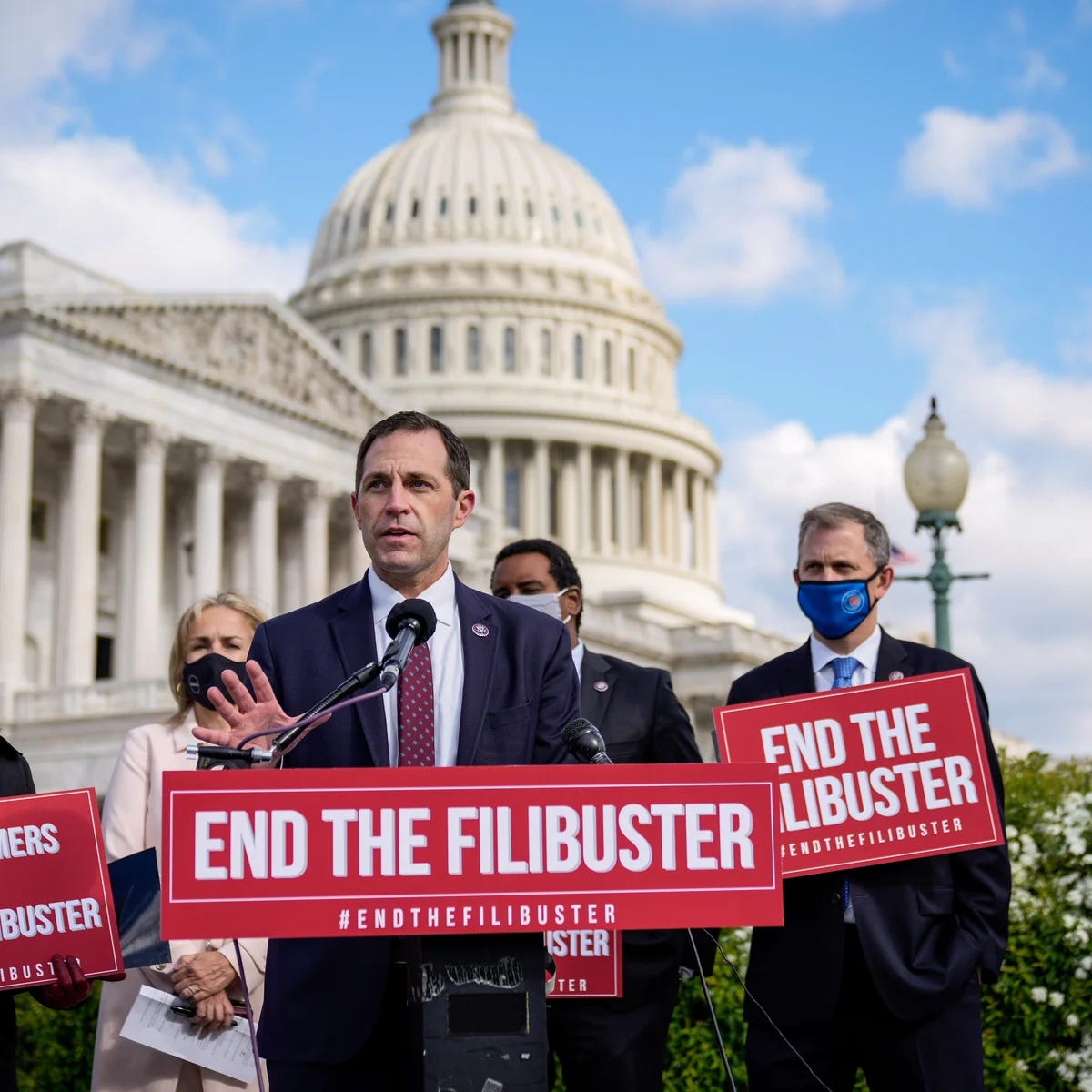
As he notes, filibuster reform is needed not at some opportunistic time for a Democratic president in the future. It’s needed now.
Only then could coalitions within the Democratic Party and across both parties and independents develop and pass popular public policy legislation. Only then can Americans more broadly participate in debates over policy proposals. Because otherwise Congress can only circumvent the filibuster to pass policy agendas in inscrutable omnibus legislation.
New majorities appear possible in the new Congress for very popular policies on affordability, cracking down on political corruption, funding for expanded social security and Medicare, and even AI and the future of work. Such legislation would likely be vetoed by Trump. But with the filibuster in place, it’s much harder for voters and civil society can’t push or evaluate Congressional efforts to forge policy coalitions on these issues.
The Presidential primary and general election will be the main theater in which these policy coalitions get contested and forged. But it will be limiting in the lead-up and aftermath of the next election if Democrats and their next Senate leader maintain the filibuster in its current form.
Here’s what Marshall wrote:
In her note to TPM over the weekend, Theda Skocpol made a long list of good observations and suggestions about Democrats’ path forward. One of them was deceptively simple: “Stop passing huge kitchen sink bills no one understands and instead pass one at a time popular measures and force Trump to veto them.” This is one of the great lessons of the first two years of the Biden presidency. The lesson stretches back into the Obama years. His administration and congressional Democrats actually went to some lengths to hide Great Recession public relief/stimulus checks in the innards of tax refunds. This should be obvious to everyone by now. One of the perverse side effects of Democrats being the party that is serious about governing is that they tend to think of legislation purely in policy terms. But legislation isn’t just a technocratic fiddling under the hood of the engine of government. It’s a public conversation with voters.
But there’s a catch. There’s another reason they do those huge omnibus bills where no one knows what’s in them. The filibuster. There’s simply no way to do them with the filibuster in place. The only way around the filibuster is the reconciliation process. And you can only do a couple of those a year. Even then, only certain kinds of legislation are allowed. So if the plan for the next two years is to pass a bunch of popular bills and force Republicans to vote against them and Trump to veto them you actually can’t do that because none of that will even get to a vote in the Senate.